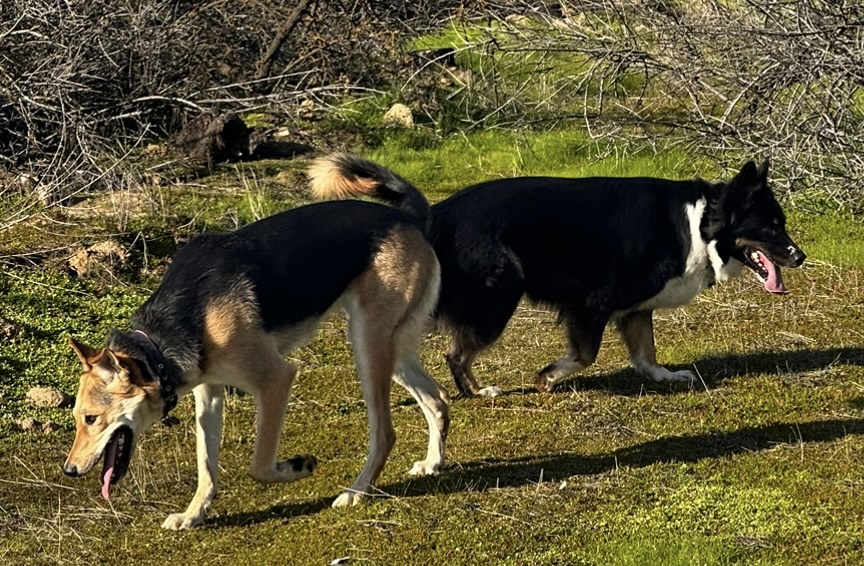

As an older dude who’s been living with two big dogs for quite some time now, I’ve learned a thing or two about their quirks and eccentricities.
My canine compadres have taught me a wealth of knowledge about what it takes to juggle the unique challenges and rewards of a household dominated by furry giants. So, buckle up fellow dog lovers, and let me take you on a journey through my memoirs, sharing valuable tips, tricks, and traps for living harmoniously with two big dogs.
Ah, the joys of sharing your living space with two large dogs. Take it from someone who’s seen the mayhem first-hand: if you’re not careful, you may find yourself drowning in a sea of fur and chewed up shoes.
Yet, with time, patience, and some creative problem-solving, I’ve discovered that a little humor and perspective can go a long way in making life not only bearable but remarkably enjoyable with my four-legged friends.
From dealing with their oversized dietary needs to tackling the inevitable messes they create, I’ve experienced the full spectrum of doggy drama.
As you read on, I will divulge how I’ve managed to survive and thrive amidst the daily chaos, guided by the love and loyalty of my two big dogs.
Allow me to regale you with tales of triumph, adventure, and hilarity that come with the territory of being an older dude living with man’s best wingmen.
Laying the Ground Rules: Canine Codex
Rule #1: Divide and conquer
With two big dogs, you’ll need to establish separate spaces for each of them.
I learned this the hard way when my two behemoths, Sir Barks-a-lot and Madame Drool, decided my living room was their Thunderdome. So, here’s the Canine Space Allocation Plan:
| Doggo | Living space | Forbidden Territory |
|---|---|---|
| Sir Barks-a-lot | Right half | Left half |
| Madame Drool | Left half | Right half |
| Human (that’s me!) | [Cramped corner] | Entire house (RIP) |
Rule #2: Mealtimes – the hunger games
I can’t stress this enough: never feed them together.
Once, I was almost mistaken for dinner when I had to navigate two very enthusiastic dogs swallowing their food (and anything in their way). The solution?
- Feed them simultaneously but in separate rooms
- Ensure matching portions (jealousy erupts!)
- Dinner bell: a distinct sound they recognize as mealtime
Rule #3: Walk them, don’t let them walk you
When walking your big dogs, always use a harness and a leash.
During our strolls, I’ve had some close encounters with rogue squirrels; there’s nothing more comical than an older dude trying to maintain balance with two large dogs pulling in opposite directions.
Follow these Walking Tips:
- One is a company, two is a crowd: Walk dogs one by one. If you must walk them together, employ the help of a fellow dog-loving friend.
- Safe distancing: Keep both dogs on the same side of you. This minimizes tangles (leave the tangos for the dance floor).
Sofa Strategies: Navigating Shared Spaces

As a seasoned older dude with two big dogs, I’ve developed some sofa strategies that allow us to maintain peace, harmony, and cleanliness in our shared living space.
Rule 1: Establish boundaries
Early on, I realized that establishing boundaries is crucial with my big furry friends. To maintain a sense of ownership:
- Place a designated dog blanket on a specific section of the sofa
- Use gentle guidance to teach them to stay within that area
Rule 2: Keep it clean
Sharing a sofa with two big dogs can lead to unpleasant olfactory encounters. Here are some tried-and-true tips to keep things smelling fresh:
- Regularly launder that dog-designated blanket
- Keep a lint roller handy for quick fur clean-ups
- Create a cleaning schedule (Nobody wants to sit on a fur-coated sofa. Trust me!)
| Day | Cleaning Task |
|---|---|
| Monday | Vacuum sofa |
| Wednesday | Launder dog blanket |
| Friday | Lint roller session |
Rule 3: Embrace the snuggle
Despite the challenges, one of the most enjoyable aspects of living with two big dogs is the abundance of warm, fuzzy cuddles. A few pointers for optimal snuggling:
- Encourage them to rest their heads on your lap peacefully (avoiding the dreaded drool puddle)
- Gently guide their paws to avoid sudden scratches during sudden, intense TV moments
Remember, balance is key in navigating shared sofa spaces with your canine companions.
Treat Tactics: Bribes for the Behemoths

Let me tell you, managing two big dogs ain’t a walk in the park. But treat tactics can make life a heck lot easier. Before we dive in, remember ol’ Eddie over here ain’t a certified dog behaviorist, but at least I got years of experience handling the behemoths.
So you want to know the secret to getting your big dogs to listen to you? High quality treats. No dog can resist the smell of scrumptious human-grade goodies.
Be it a savory piece of chicken breast, a crunchy home-cooked biscuit, or the classic doggie’s favorite: peanut butter. Though make sure it’s xylitol-free.
Here’s a quick list of my go-to treats:
- Large jerky pieces: easy to break into smaller bits
- A cheese wedge: cut up into thin slivers (providing they ain’t lactose intolerant!)
- Frozen peas and carrots for that occasional low-calorie option
Be mindful of allergy concerns and opt for hypoallergenic treats if necessary.
Another important factor is the timing of your treat bribes. Here’s a simple 3-step guide on when to bribe those gentle giants:
- Capture their complete attention: make sure both dogs are looking straight at you
- Command a desired behavior: such as “sit” or “stay”
- Reward with the treat, offered one at a time to avoid any treat stealing
Remember to keep your bribes as surprises. Mix up the types of treats, so they won’t catch on too easily.
Finally, let’s not forget the treat traps that lure unsuspecting dog owners. Here’s a neat table for those trying to avoid rookie mistakes:
| Common Trap | Solution |
|---|---|
| Overfeeding | Cut treats into smaller pieces |
| Over-dependent | Gradually phase out treat rewards |
| Pecking order | Establish boundaries and hierarchy |
Walk Woes: Maneuvering the Leash Labyrinth
Believe it or not, walking two big dogs can quickly devolve into a scene from an action movie, minus the heroic soundtrack. Here are a few of my hard-earned pointers that may help you avoid untimely tumbles or becoming an impromptu street performer.
Double-dog Leashes: Bless the inventor of double-dog leashes, and may their pet treats be forever overflowing!
Seriously, this genius contraption is invaluable. Although, beware – these leashes can transform from helpful to tangled torment in a matter of seconds.
- Keep It Short and Sweet: I like to keep the leashes short, providing my furry friends just enough space to investigate their surroundings (nose first, of course) without allowing them the freedom to become full-fledged escape artists. Leash control is key, my friends!
- Pick Your Battles: Choose your adventures wisely. As much as I love exploring new streets with delightful foliage, a narrow sidewalk overrun with signposts and fire hydrants is a recipe for one hot tangled mess. Tip: Opt for open, spacious walks – parks are amazing, and your dogs will thank you for the extra sniff-tastic goodness.
- Walk on the Wild Side: When walking multiple dogs simultaneously, positioning is crucial. Assign preferred sides for each of your canine companions, ensuring a designated walking lane helps in avoiding embarrassing entanglements mid-walk. Pro Tip: Consistency is key. Stick to the assigned sides, and soon enough, they’ll be cruising smoothly like a well-oiled machine.
The Barkety Split: Deciphering Dog Discourse

Life with two big dogs can be a ruff experience, especially when you’re trying to decipher their barking language!
Fortunately, I’ve learned a thing or two over the years about the subtle woofs and whines of canines. Today, I’m going to share a few of those tips and tricks with you.
Living with two dogs means you’ll hear a lot of barking. But not all barks are created equal, my friends, and it’s important to understand the different types of barks.
Here’s a table of common barks you may hear, and what they might mean:
| Bark Type | Possible Meaning |
|---|---|
| Short, high-pitched | “Excitement” or “Look at me!” |
| Rapid, high-pitched | “Come play with me!” |
| Low, rising pitch | “I’m alerting you to a potential intruder.” |
| Single, flat tone | “I’m lonely.” |
| Continuous, high-pitched | “I’m scared or hurt.” |
Understanding these barks can help save you from thinking your home is under attack every time a leaf blows across the yard, but dogs have multiple ways of communicating.
Non-barking signals are just as important to understand as barks. Some signs to watch for include:
- Tail wagging: Most of the time, a wagging tail means a happy dog, but there are nuances to the wag. A slow wag might mean apprehension, while a fast, stiff wag could mean aggression.
- Yawning: Believe it or not, dog yawning may not just mean they’re tired. It can also signal stress or anxiety.
- Ear position: A dog’s ears can tell you a lot about their mood. Ears perked up usually indicate curiosity, while flattened ears can be a sign of fear.
Now, living with two dogs, you might notice they have a barking language of their own. In fact, I’ve found that much like longtime human companions, dogs will pick up on each other’s communication habits and fine-tune their barks in response.
Fur Frenzy: Household Hairy Tornado Management
When I became a father to two big dogs, I quickly realized that my life as a neat freak had met its match. I thought being an older dude meant I’d seen it all, but I had no idea what a hairy tornado looked like until I welcomed those fluffy beasts into my home.
However, I’ve developed some nifty tricks to tame the storm, and I’m more than happy to share them with you.
Grooming Galore. Regular grooming is essential – it’s not negotiable.
Invest in a decent brush and commit to a daily brushing routine. This way, you’ll capture the hair before it gets a chance to take over your house and turn it into a furry wonderland. If you don’t already know, trust me, you will.
| Grooming Tools | Purpose |
|---|---|
| Slicker Brush | Daily brushing |
| Deshedding Tool | Weekly deep grooming |
| Dog Shampoo | Monthly baths |
Strategic Cover-ups. Admit defeat gracefully and surrender some territory.
Yes, your couches and beds are now dog property. But you can still be a responsible adult by having protective covers and blankets.
Washable ones, of course – we are not animals, after all! Keep a few sets handy so you can swap them out when it’s time for laundry.
- Sofa covers
- Bed covers
- Floor mats and carpets
Vacuuming: Your New Part-time Job. Alright, I must confess that vacuuming is my secret passion. I love the satisfaction of sucking up all the hair and transforming the place into a hair-free haven.
However, you don’t have to be obsessed like me to succeed; consistency will do.
A quick run of the vacuum every other day, and a thorough vacuum at least once a week should keep the hair tornado at bay. Remember, the secret is in sticking to this routine.
Slobber Chronicles: Tales of Dribble and Drool
Living with two big dogs has taught me a valuable lesson: embrace the slobber. Yes, I feel you; we have all been there. It’s a mixed blessing, referring to the messy, dribble-covered household and the hilarity that ensues.
The Drippy Duo, as I affectionately call them, have brought me oodles of joy, but sometimes, I have to take matters into my own paws, quite literally.
Here’s a quick rundown of my tried and true tips for navigating the slippery, slimy world of doggy drool:
- Arm yourself with drool rags: Think of these rags as your trustworthy samurais against slobber. Keep them scattered around the house, so you’re always prepared for a surprise attack of dribble.
- Invest in washable fabrics: Life is easier with machine washable everything. Couch covers, dog beds, cushions—go wild! Pro-tip: keep some throw blankets handy for those impromptu cuddle sessions. Keep it clean, folks!
- Claim your territory: I know it sounds harsh, but setting some slobber-free zones can be a lifesaver. Whether it’s your favorite armchair or cherished family heirlooms, claiming a drool-free space can maintain a semblance of cleanliness and sanity.
| Dog-proof Areas | Items to Keep Safe |
|---|---|
| Kitchen Counters | Food |
| Office Desk | Computers, Important Documents |
| Bedroom | Pillows, Meditation Space |
The Art of Double Dog Diplomacy
Rule #1: Divide and Conquer
Having two big dogs can be quite the challenge, but the key to success and, frankly, survival, is dividing and conquering. Don’t let them gang up on you!
For example, when you’re giving out treats or food, use separate bowls at opposite ends of the room. Just like this:
| Dog #1 Bowl | Dog #2 Bowl | |
|---|---|---|
| Food | ⟺ Distance ⟺ | Food |
This keeps the peace and also saves your kitchen from becoming a battlefield.
Rule #2: Bonding Through Training
Training two big dogs simultaneously can be chaotic, but it’s essential for maintaining order. I recommend teaching them obedience skills individually, like sitting, staying, and lying down.
Once they have a solid foundation, practice teamwork exercises like synchronized leash walking. Trust me – it’s a spectacle that’ll turn heads at the dog park.
- Start with basic commands (individually)
- Sit
- Stay
- Lie down
- Graduate to group exercises
- Synchronized leash walking
Rule #3: Create Personal Space
Everyone needs personal space, including dogs. I suggest giving each dog their own designated area.
This can be as simple as separate beds or crates, or as complex as dedicated rooms (if you have the space). Make sure they get solo time with you, too.
Schedule one-on-one walk or playtime, like so:
Monday: Walk with Dog 1
Tuesday: Walk with Dog 2
Wednesday: Playtime with Dog 1
Thursday: Playtime with Dog 2
 Aristotle Rising
Leave a comment